
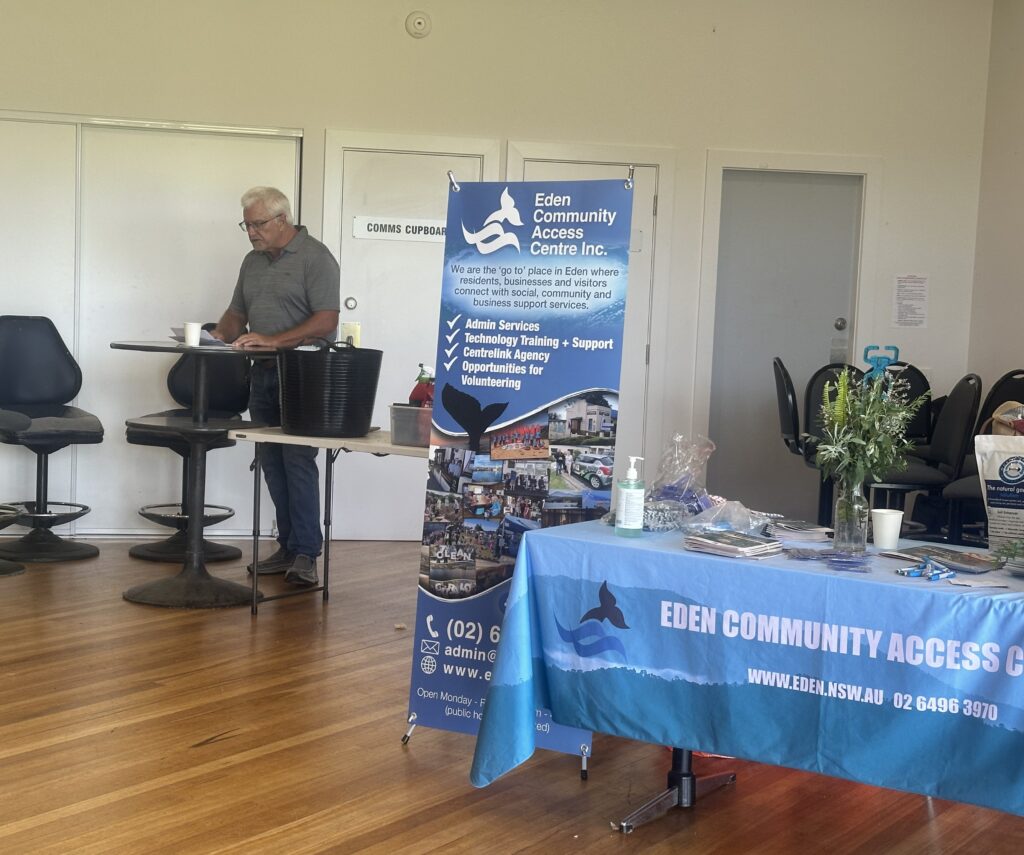
Garry Hunter from the Clean Curalo Project spoke at the Nurturing Nature Day on the 12th of February about the changes in the depth of the lake from 1.9mtrs in 1997 to 1.5mtrs in 2017. Read on to hear what Garry had to say: Clean Curalo was formed in early 2022 as a community-led project focused on reducing sediment and rubbish entering Lake Curalo. Clean Curalo is about caring for our waterways—advocating to improve the catchment by stabilising erosion, reducing sediment, and creating a cleaner, healthier lake for everyone to enjoy.
Lake Curalo is incredibly important ecologically.
There are 164 recorded species of birdlife on and around the lake. It supports many aquatic species including mullet, flathead, bream, tailor, trevally, prawns, eels, and amphibians.
The lake also contains six types of wetlands, including saltmarsh which plays a critical role in trapping and recycling nutrients and filtering silt from catchment runoff—it’s one of nature’s best water filters.
A bit of history helps explain where we are today.
In the early 1900s, the lake entrance opened and closed much as it does now. When open, the channel was up to 1.5 metres deep, allowing vessels drawing about a metre to cross into the lake for repairs at Archie’s Boat Shed near Lakeside Drive.
In the 1950s, homemade catamarans sailed on the lake. Go-kart racing once took place on the eastern sand flats where Reflections Caravan Park now stands.
There was a horse racing track and an airfield on the northern foreshore, and in the late 1970s flying boats even used the lake as a base for tuna spotting. A small jetty once sat near the football oval, deep enough for small boats to tie up.
Lake Curalo was officially proclaimed a bird and animal sanctuary in 1927.
As Eden developed, the lake changed.
The soccer field was cleared in the late 1960s. Around the same time, Emblen Street was built on imported fill, caravan parks were developed, and Eden High School was built in the early 70’s.
In the early 1990s, George Brown Oval was constructed beside Golf Course Creek, using 13,000 cubic metres of dredged lake material to raise the playing fields.
Development has made it necessary to artificially open the lake at 1.2 metres above mean sea level (MSL) to prevent flooding of low-lying assets. Prior to development, the lake opened naturally at around 2.0 metres above MSL.
Reclaiming wetlands and riparian areas for development has reduced the lake’s ability to absorb stormwater. Instead, water is forced through narrow channels, increasing flow velocity, erosion, and sediment entering the lake.
Sediment has been slowly filling Lake Curalo for decades, reducing both water depth and water quality. It’s estimated that around 350 tonnes of sediment enters the lake every year from stormwater drains, creek bank erosion, roads, tracks, and unsealed surfaces.
In 1997, the deepest part of the lake was 1.9 metres. By 2017, it was down to 1.5 metres—and continues to get shallower.
The stormwater channel at the sporting complex is severely eroded and urgently needs stabilisation. This erosion has created a large sediment delta in the lake, reducing depth. Similar sediment deltas exist at Freshwater Creek, Golf Course Creek, and Palestine Creek, with more sediment entering the lake with every rain event.
If we want to preserve Lake Curalo as a healthy ecosystem for future generations, reducing sediment and rubbish is critical.
Eden looks like a clean town—and overall it is—but dig a little deeper and there’s a serious litter problem. About 75% of Eden lies within the lake’s catchment, from Bass Street to Bellbird. Rubbish dropped or blown far from the lake often ends up in creeks and stormwater drains—and eventually into Lake Curalo.
In 2023, for the first time we know of, the entire intertidal zone of the lake was cleaned producing more than 1,000 litres in volume of rubbish.
In 2024, the lake was closed and rubbish collection was limited due to high water levels, restricting access to the boardwalk areas only.
Early 2025, the lake was opened enabling access to the inter-tidal zone once again. In total 1,800 litres of rubbish was collected for the year, averaging around 20 litres of rubbish per 100 metres. The worst area was the eastern perimeter of the basin, with 170 litres per 100 metres—That section alone produced over half the total volume of rubbish collected.
This year to date (11th Feb 26), 300 litres of rubbish has been removed from the lake.
In 2023/24, Clean Curalo installed two trash traps in open stormwater drains—one behind the Scout Hall and one at Lakeside Drive. Designed by Clean Curalo and funded by BVSC, they are low-cost, portable, and able to withstand small to medium flows.
These traps don’t just catch visible rubbish—they also collect the clear macro plastics mixed in with leaves, sediment, and organic matter. This pollution is largely invisible and extremely harmful to wildlife.
The good news is that late last year, BVSC formed a Litter Prevention Steering Committee, working with the EPA to develop a five-year Litter Prevention Roadmap. It’s great to see local government taking a proactive approach to preventing litter pollution and looking forward to seeing new initiatives as the project progresses.
Council has also finalised the Coastal Management Plan which became live last September. The CMP is a ten-year program of works to improve Lake Curalo and the catchment.
So—what are some of the things you can you do to help reduce litter?
• Make better supermarket choices—reduce plastics, avoid individually wrapped items such as lollies and coffee sachets.
• Use reusable coffee cups, bottles, and containers. Australians use approximately 1.5 to 1.8 billion single-use coffee cups every year.
• Help keep your street clean by picking up rubbish near your home.
• And take 3 for the sea. Pick up three items of rubbish on your daily walk.
Small actions, multiplied across our community, make a big difference.
Click on this link Clean Curalo Project to learn more about the Clean Curalo Project